Advanced Mastering Class | Miami
Advanced Mastering Course
Elevate your skills with our 24-hour Advanced Mastering course, ideal for graduates of our Mixing and Mastering program or self-taught mixer-producers. Master songs and soundtracks of all genres for various streaming platforms in this modern course designed for today’s multi-genre engineer/producer.
Our Miami classes for the Advanced Mastering Class are small and hands-on, taught at our studio by producers active in the city's electronic, Latin and hip-hop scenes. If you would rather learn from home, the same sessions run live online with the same instructors and the same class size, using our specialist music collaboration software, Muse.
Introduction and Mixing Recap
- →Reference Tracks
- →Speakers & Headphones
- →Frequencies
- →Dynamic Processing
- →Effects
- →Critical Listening
Metering and Rendering
- →Gain Staging
- →Meters used in Mixing & Mastering
- →Mixing Groups
- →Rendering your Premaster
- →How to Prepare for Mastering
History and Overview of Mastering Process
- →History of Mastering
- →Setting up a Mastering Session
- →Overview of Ozone & FabFilter Suite
- →Critical Listening
Mid/Side
- →What is Mid/Side
- →History of Mid/Side
- →Mid/Side Techniques
Maximizers
- →What is a Maximizer
- →Ozone Maximizer & FabFilter Pro-L walk-thru every function.
- →Practical Use
Creating a Mastering Chain
- →Creating an efficient Mastering Chain with Ozone & FabFilter
- →Step by Step Hands-on Instruction
- →In depth explanation of Modules & Signal Flow
Metering / Phase and Dithering Analysis / Stem Mastering
- →Meters used in Mastering
- →Phase & Dithering
- →Stem Mastering for Clients
Advanced Techniques
- →Expanding Your Mastering Chain
- →Using Virtual-Analog Signal Processors
Mastering for Streaming and Broadcasting
- →Explanation & History
- →Modern Day Application
Referencing, Finalizing, Exporting
- →How to Reference
- →Finishing Up
- →Exporting
- →Group Critique
Studio A Gear list (click)
- →Studio set up- Pro Tools HDX with Apogee Dual Set up
- →Convertor- Lynx Aurora 8
- →Speakers- Adam S3V with Adam Sub 12, Yamaha NS10s with Bryston 4B Amp
- →Monitor Control- Dangerous D Box
- →Microphone- Manley Reference Cardioid, Shure SM57s
- →Pre Amps- Chandler Limited TG2, Heritage Audio 1073
- →Reverb- Bricasti Design M7
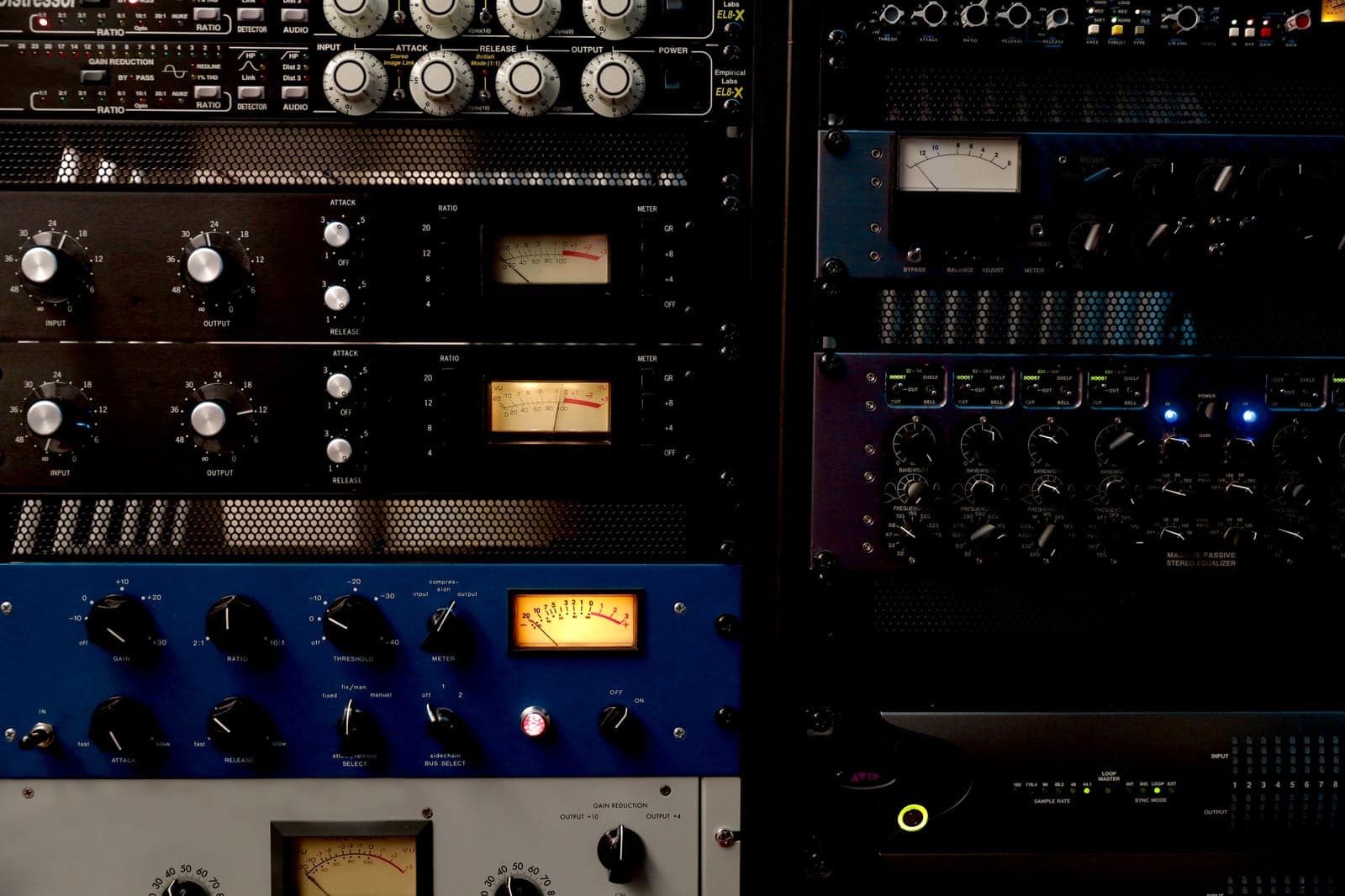
- →Compressors- Teletronix LA2A, Urei (Universal Audio) 1176, SSL XLogic G-series Compressor, Empirical Labs EL-8 Distressor
- →Piano- Yamaha U3
- →Universal Audio Satellite
- →Synthesizers & Drum Machines- Roland Juno 60 (with MIDI), Juno 106, JX3P, Sequential Prophet Rev 2, Mellotron M4000D, Korg MS20, Triton Studio, Moog Subphatty, Yamaha DX7, YS200, Behringer Poly D, RD-8, Neutron, Arturia Matrix Brute. More exotic pieces like the Formanta Polivoks, EMS 01, Sequential Prophet 10, Erica Synths Perkons HD-01 and other semi modular pieces available upon request.
- →All synths are MIDI connected for DAW use via iconnectivity MIO and Clever Audio MXM 12 Synth switcher
- →We also have a guitar pedal collection for sonic experiments in studio
Who is this course for?
- →Producers & DJs looking to learn Advanced Mastering techniques so that their songs stand out in playlists and DJ sets
- →Artists and Composers who wants to master “in-the-box”, also develop solid foundations in principles and practices of pro mastering studios
- →Mix Engineers and self-taught students wishing to learn Stereo Bus processing, Mid/Side, delivery formats etc
Course Highlights
- →Free & discounted software from our partners like Arturia & FabFilter
- →24 hours of world-class training in Advanced Mastering by award winning engineers
- →Hands-on approach in focused limited class sizes
- →Feedback and weekly challenges for accelerated learning
Why choose Advanced Mastering course at Garnish?
Meet Our World-class Instructors
Our instructor roster ranges from Multi-Platinum Songwriters and Producers to rising Miami Hitmakers and Mixers

Our Students Say. . .
Contact Admissions Discover qualities that distinguish us, here.
“At last I have a clear perspective of how mixing and mastering works!”
Andres Alzate
Common questions, answered.
Yes. The Advanced Mastering Class runs in person at Garnish Miami and live online in the same sessions, using our music collaboration software, Muse - you join whichever suits you.
Yes. The Advanced Mastering Class can be taught one-to-one, in person in Miami or online, built around your own projects - ask admissions about private instruction.
Mastering songs and soundtracks of every genre for the streaming platforms, as today's multi-genre engineer-producer has to.
The Advanced Mastering Class runs 24 hours. Tuition at Garnish Miami: $1,499 + $100 registration (14+ days out) / $1,799 + $200 otherwise.
Graduates of our Mixing and Mastering course, and self-taught mixer-producers ready for the last step.
$1,499 + $100 registration (14+ days out) / $1,799 + $200 otherwise
Let's get you started.
InquireMastering
A full guide to mastering - what it is, how multi-band compressors work on the master buss, choosing crossover points and prepping tracks.
Read →Mastering
Mastering is a vital part of the recording process, so much so that a substantial amount of ‘mystery’ is associated with it. We’ve all heard stories of…
Read →Monitor Placement
Typically you should be situating yourself and the two monitors at each corner of an equilateral triangle – pictured below – with you head positioned at…
Read →Automation: Mixing as a Performance
A mix is not a set of static positions. Fader rides, send moves, section steps and the four automation modes - plus the override that catches everyone.
Read →Signal Flow and Routing
Gain structure, why faders belong near unity, and how side-chain routing works - the plumbing that everything else in a mix sits on.
Read →Modulation Effects
Beyond chorus and phasing: ring modulators, frequency shifters, Leslie cabinet simulation and auto-panners, and where each one belongs.
Read →