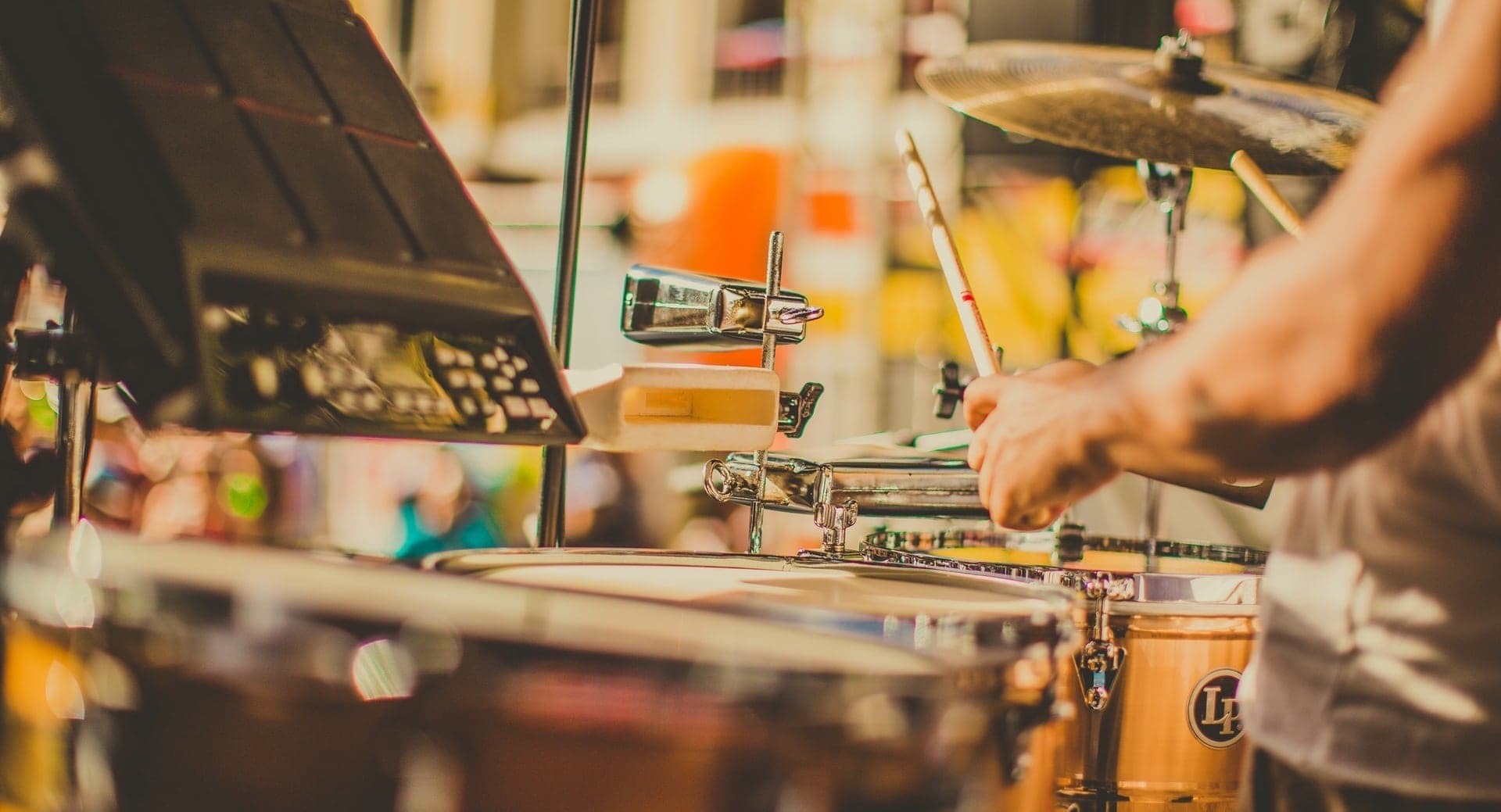
Rhythm Section Programming Class | Miami
- →Think like a drummer. Make realistic drum patterns and fills
- →Make your guitar and bass parts more musical
- →Learn how top session musicians approach their instruments
- →Master the rhythm section: the building blocks of your beat
Rhythm Section Programming
- →Learn how top session musicians approach their instruments
- →Master the rhythm section: the building blocks of your beat
- →Think like a drummer. Make realistic drum patterns and fills
- →Make your guitar and bass parts more musical
Student reviews.
“I work with some of the biggest music producers in the industry on a daily basis. Now I understand how they do what they do.”
Shaun Royer
Instructors


Common questions, answered.
Yes - see the Rhythm Section Programming Private Instruction page.
Take a look at our longer 360° Academy program and the student feedback for it.
Realistic drum pattern and fill programming, more musical guitar and bass writing, session musician technique, and mastering the rhythm section as your track's foundation.
Either - it's available in-person or at a discount through Live Online.
Producers and songwriters whose programmed drum, bass and guitar parts need more life in them - it's about making those parts sound played, not sequenced.
18 Hours | In-Person: $599 + $200 ($100 early bird) Registration Fee | 33% off Live Online
Let's get you started.
InquireWhy Garnish?
Drum Miking Techniques
Drum Miking Techniques: Recorder Man and Glyn Johns Katie Gilchrest's take on drum miking techniques Many considered the drum set one of the hardest pieces of equipment to mic in a studio. A drum kit is not one instrument, but a collection of multiple instruments, featuring a wide variety of differe
Read →How To Improve Bass In Music
How To Improve Bass In Music Bass can be a very complicated part of your mix. Actually, we’d even go and say that the majority of home-producers or home-recorded work, don’t have a good low-end, which is really the basis (get it, bass-is?) for any mix. In this article, we look at how to improve bass
Read →How to Compress Drums
The sound of modern drums in rock, pop, and electronic music very rarely embodies the natural range that acoustic drums are capable of. This is most often due to the application of compression, adding punchiness, energy and consistency to a drum track.
Read →How to EQ Vocals
How to EQ Vocals Katie Gilchrest's guidelines on how to EQ vocals. For most styles of music, vocals are one of the most important parts of the mix. Poorly EQd vocals can cause detriment and distraction to an otherwise great song. Equalization using a parametric EQ is a tool that can allow vocals to
Read →What does a music producer do?
by Chris Porter It would be easy to write an entire article arguing about exactly what this question means, but the simplest answer (and the truth of the matter) lies behind the scenes - of whatever parameters the interested parties have agreed to. Allow me to explain… In today’s world of music crea
Read →Audio Interfaces
Audio Interfaces An audio interface is a piece of hardware that connects musical instruments, microphones, and other sound sources to a computer. The audio interface acts as a bridge between the analog audio signals from the instruments and the digital signals that the computer can understand and pr
Read →