Mixing & Mastering Class | Miami
Mixing & Mastering Music Production Course
Is there something missing from your mixes that stops them sounding professional? Do you understand the basics, but can’t quite elevate your finished product to the required level? If you’re looking for a way to lend your mixes the depth, punch and clarity they deserve, your search is over! Learn all you need in a nurturing environment of small classes where the art of high-end mixing and mastering is finally revealed.
Our Miami classes for the Mixing & Mastering Class are small and hands-on, taught at our studio by producers active in the city's electronic, Latin and hip-hop scenes. If you would rather learn from home, the same sessions run live online with the same instructors and the same class size, using our specialist music collaboration software, Muse.
EQ, Environment, Acoustics, and Separation
- →Studio monitor speaker design
- →Acoustics and acoustically treating your home studio
- →All about mono, stereo and 5.1 in your software DAW
- →The art of balancing and panning
- →EQ workshop
Dynamics
- →Hearing dynamics
- →In-depth with all the parameters of dynamic controllers
- →Types of compression circuitry, their digital emulations, what to use & why
- →Parallel dynamic processing
- →Gates and de-essing tips
- →Dynamics controller tips to achieve clarity in your mix
Reverbs, Delays and Other FX
- →Types of reverb and delay, where to use them
- →In-depth with all the parameters
- →Spatialization with convolution reverbs and delays
- →Phaser, flanger, chorus, pitch shifters, harmonizers and creative FX
- →Tips on how to make your records come to life with FX
Vocals, Automation and Getting Creative in the Mix Process
- →Filtering and samples
- →Vocoder, Ring Modulators, Envelopers, Auto panning, distortion and bit crushing
- →Preparing vocals, vocal comping and tuning vocals
- →Getting separation between lead and BVs
- →Tips on automating levels (rides)
Mixing Electronic Music
- →Side-chaining dynamic controllers and filters for ducking, FX and punch
- →Getting creative with reverb and delay
- →Making thin sounds bigger
- →Mixing techniques which only apply to electronic music but are very useful to know for everyone
- →Electronic music listening critique (bring in your tracks if you wish)
- →Electronic music mix analytics – analyze the mix elements of your favorite tunes
Introduction to Mastering
- →Using references to get your EQ and separation. A/B’ing
- →EQ, brick wall limiting, levels and phase
- →Using mastering plugins – dos and don’ts
- →The best metering tools
- →Live music listening critique (bring in your tracks if you wish)
- →Live music mix analytics – analyze the mix elements of your favorites live and acoustic tracks
Today’s modern music market means your mix has to stand out to gain recognition. Our mixing and mastering course will teach you both classic techniques and newer, cutting edge tricks and tips used by those at the forefront of the industry. We have a superior roster of instructors waiting to share their skills and knowledge to guide you to be able to create your own finished masters. You could save a fortune by removing the need to hire someone else to do these jobs for you!
You get 36 hours of class time, including some focussed Q&A with your instructor and also with like-minded fellow students who are looking for the same things you are. There’s nothing like learning under these conditions, where you can learn even more from the different viewpoints of the other creative minds sharing the room with you. Mixing is as much about perspective and choices as technology, and in these sessions you will all listen and feedback on mixes in an acoustically-treated studio to further your understanding and appreciation of the artform.
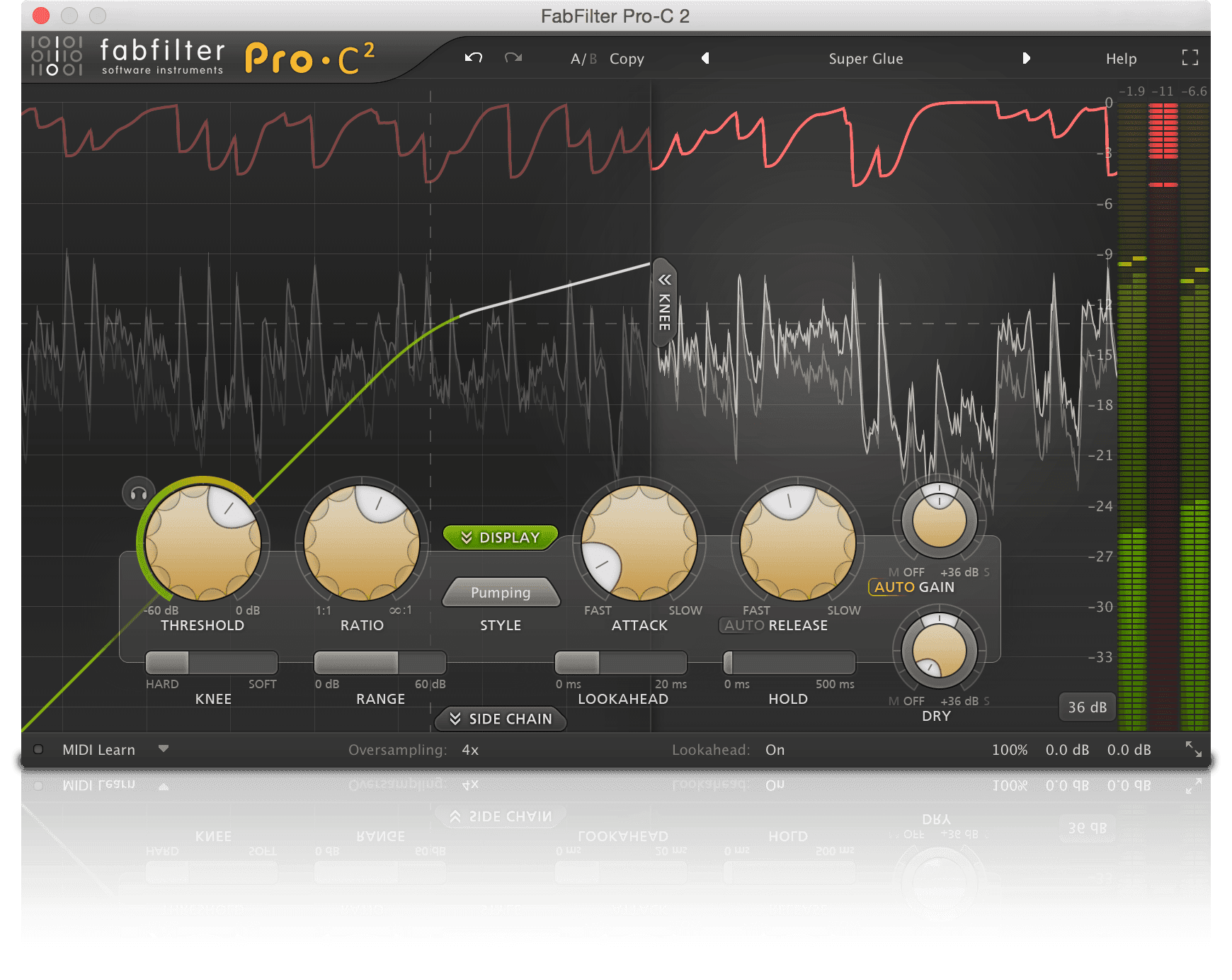
On the course, students will get to use Fabfilter, a piece of third-party software that runs on all popular DAWs. It’s not essential for students to own this if using Pro-Tools, Ableton or Logic but here at Garnish we do heartily and thoroughly recommend it. Better yet, if students do wish to own it, as a Garnish learner you qualify worldwide for a healthy 50% discount. Discover qualities that distinguish us, here.
Student reviews.
“I came into the class with a good understanding of my DAW (Logic Pro X course here at Garnish) but minimal knowledge of mixing/mastering. I thought the class was a great supplement to the knowledge I gained from the Logic Pro X course. I never felt lost, and now know how to achieve a clean mix and master.”
Kevin Yee
Instructors

Common questions, answered.
No - the principles are the same regardless of DAW or platform, Mac or PC.
Yes - controller keyboards, audio interfaces and headphones are supplied as needed.
36 hours, including focused Q&A time with your instructor and fellow students.
You can, to save money, or hire a fully-loaded iMac for a $75 supplement if you'd rather not.
Yes - that's exactly the gap this course is built to close, teaching both classic and cutting-edge techniques used at the top of the industry.
You can catch up on the cycle of your choice, and even repeat parts of the course if you want to.
$1,799 + $100 registration (14+ days out) / $2,099 + $200 otherwise
Let's get you started.
InquireWhy Garnish?
Choosing Monitors
Setting up your Monitors and your room – What are the different types of monitors? – How should your monitors be positioned? – Getting the best acoustics…
Read →Recording vocals: DIY vocal booth and pop shield or filter
Recording vocals: DIY vocal booth and pop shield or pop filter: This is about how I record vocals at home with a DIY vocal booth. We cover more on this on the Sound Engineering course. I have a macbook pro plugged up to an apogee duet, pop shield or pop filter, some cables running from my dining roo
Read →Choosing Powered and Active Studio Monitor Speakers
Choosing Powered and Active Studio Monitor Speakers: The positioning, orientation and mounting of studio monitors can have a huge influence on the final sound of a room and of course your mix. I wouldn't go out and buy hi-fi speakers and a massive sub woofer if you have a room with parallel walls th
Read →Equalization
Equalization is the process by which an equalizer is used to either boost or cut different frequencies in an audio signal in order to change its tonal…
Read →Signal Flow and Routing
Gain structure, why faders belong near unity, and how side-chain routing works - the plumbing that everything else in a mix sits on.
Read →Vocals
Dynamic control is an essential part of recording vocals. The best dynamic control is achieved from someone who knows good mic technique, getting closer…
Read →