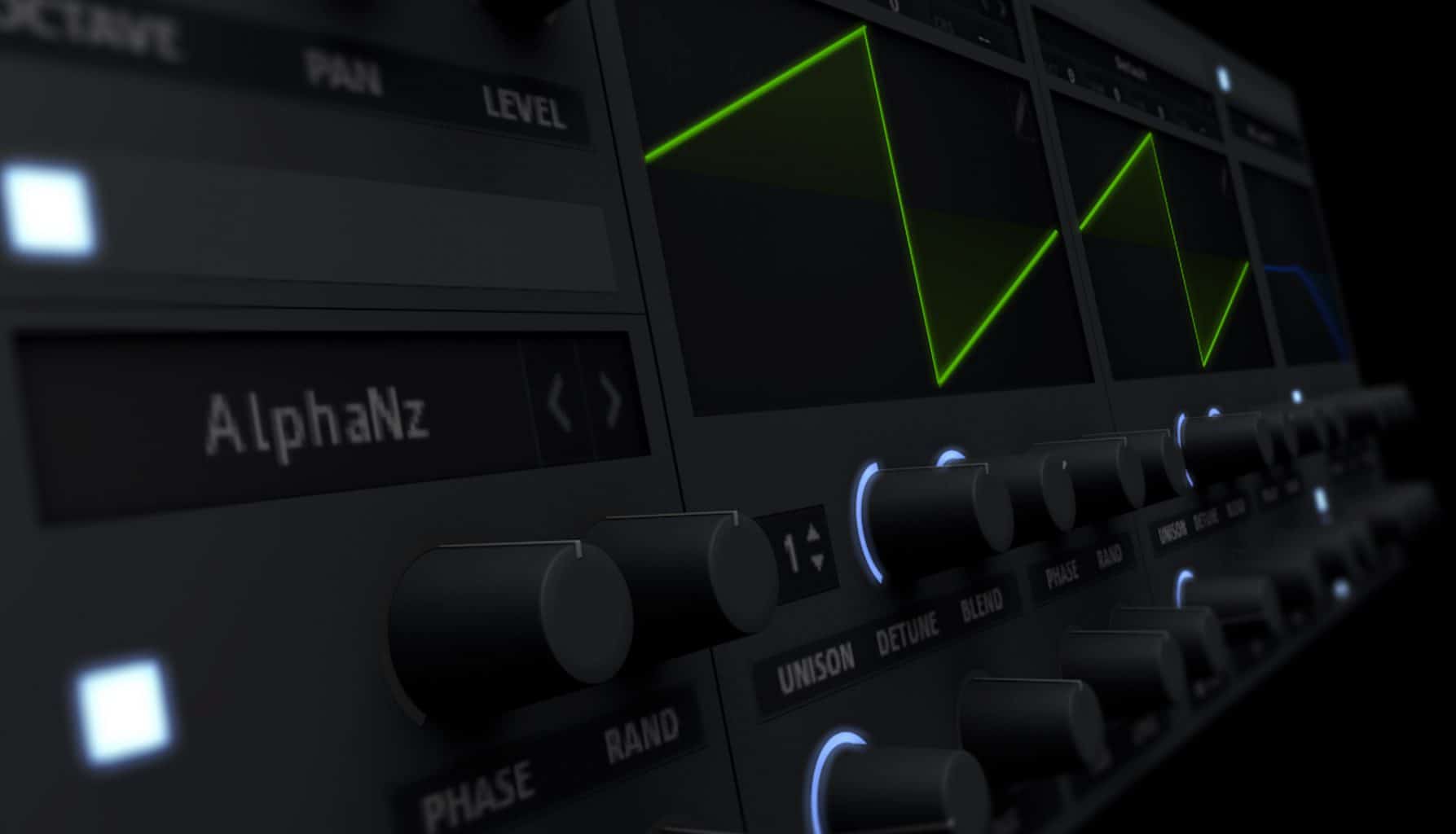
Sound Design & Synthesis Class | Miami
Electronic Music Production Course
If you want to take the next step to achieving your goals as an electronic music producer, our Electronic Music Production course is for you! With no more than 8 students per class, and 36 hours of class time, you will have the freedom to ask our instructors the questions you need answering while learning their techniques and tricks. This course will help you obtain the sounds from your head and transform them into your DAW.
Our Miami classes for the Sound Design & Synthesis Class are small and hands-on, taught at our studio by producers active in the city's electronic, Latin and hip-hop scenes. If you would rather learn from home, the same sessions run live online with the same instructors and the same class size, using our specialist music collaboration software, Muse. Discover qualities that distinguish us, here.
Overview
- →Advanced run-through of industry leading soft synths.
- →Drum programming in-depth.
- →A complete understanding of tones, processing, resampling and different effects.
- →Sound choice and genre production.
- →Arrangement techniques and components that create all parts of a song.
- →Course collaboration project – learning to work with other producers!
- →Business tips and Q&A.
Subtractive & Wavetable Synthesis
- →Understanding Oscillators, Filters, Wavetables, Envelopes & LFOs.
- →Achieving analog tones with digital soft synths of today.
- →Creating pads, basses and drums using subtractive synthesis.
- →Arpeggiating and advanced subtractive techniques.
- →Synth side-chaining, internal routing, layering & tuning oscillators.
- →Modulation and automation.
FM
- →Attaining club level sub-bass frequencies in your mixes.
- →Understanding the results of different tones and frequencies through the world of modulation.
Granular Synthesis
- →Randomness & control.
- →Achieving distinctive sounds by looping cycles of audio.
- →FX and rising techniques.
Track Mentoring Sessions
- →One to one mentoring and guidance on your masterpiece
Prerequisite: This is an intermediate to advanced course so learners must have a good understanding of their DAW. We encourage less experienced learners to attend one of our DAW courses first. With an added supplement of $75, students may use our iMac workstations that are provided in class if you do not own the listed software in the class curriculum overview. Controller keyboards, headphones and audio interfaces are always provided for everyone when needed.
Student reviews.
“The course throughly covers the fundamentals of synthesis and has helped me understand concepts that go beyond the everyday Youtube tutorial. The course has made Youtube tutorials and other concepts of sound design easily understood.”
Daniel Tran
Instructors

Common questions, answered.
No more than 8 students.
Subtractive and wavetable synthesis, FM synthesis for sub-bass, and granular synthesis.
Yes - one-to-one track mentoring sessions are included.
No - iMac workstations with everything installed are available for a $75 supplement if you don't have it yourself.
No - it's intermediate to advanced, so you should already have a good understanding of your DAW. Take one of our DAW courses first if you're not there yet.
Both are free of charge - our door stays open to former learners.
Let's get you started.
InquireWhy Garnish?
Follow Actions in Depth
Follow Actions past the basics: cycles, probability, non-repeating structures, and using them to build a set that plays itself.
Read →What Is Sound?
The physics a sound designer needs - vibration and waves, frequency and pitch, amplitude and loudness, wavelength, harmonics and timbre, phase, and the envelope of a sound - and why every synth control maps to one of them.
Read →Drums: Shaping and Synthesising
Shaping drum sounds - envelopes, transient shaping, pitch, tuning to the key, EQ and saturation - and synthesising kicks, snares, hats and percussion from scratch, including FM drums.
Read →Wavetable Synthesis
Wavetables and wave position, scanning through a table with envelopes and LFOs, warp modes, building your own tables from audio, and why wavetable synths dominate modern bass and lead design.
Read →Drums: Layering and Sampling
Building bigger, more distinctive drums - layering for attack, body and tail, phase and alignment, sampling your own hits and found sounds, resampling synth drums, and organising a drum library.
Read →Creative Audio Effects
Effects as sound design - distortion and saturation, filters and movement, delay as an instrument, reverb beyond space, modulation effects, pitch and granular effects, resampling, and building effect chains.
Read →